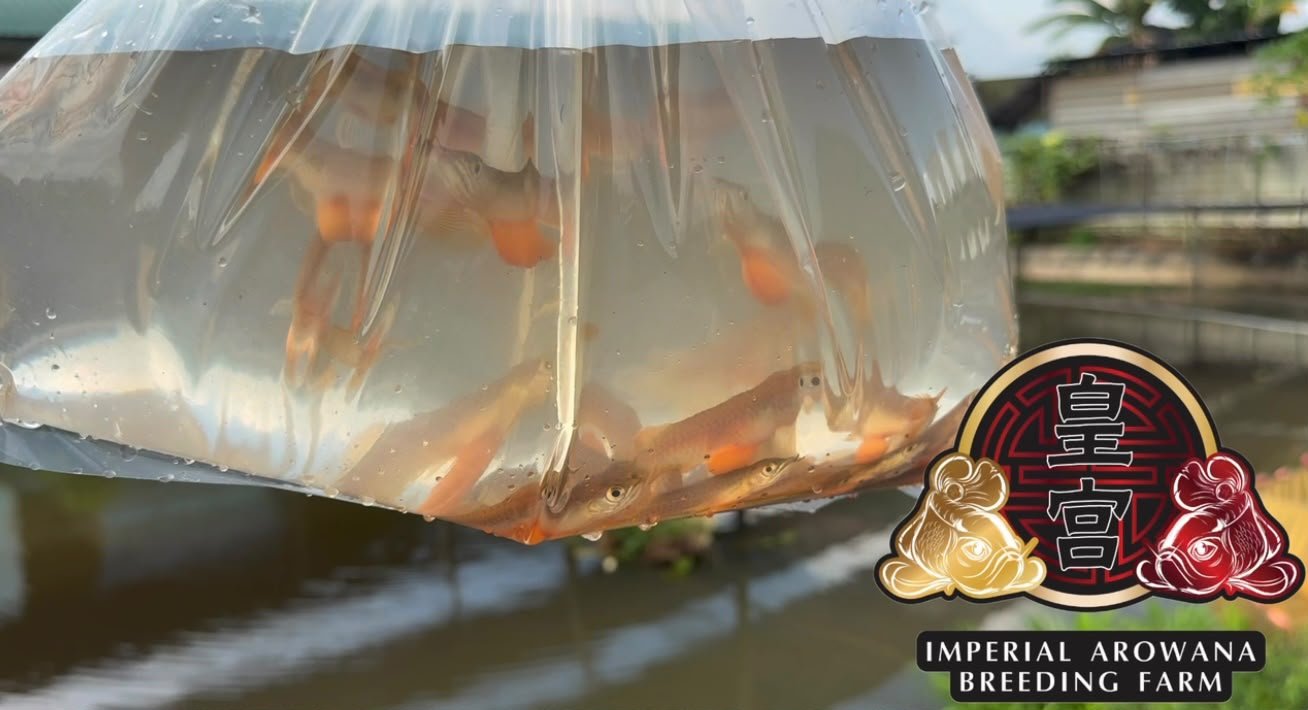
Each fish is individually microchipped, and that chip number becomes the key reference number within our own breeding database. When a fish is sent for DNA profiling, its sample and information are matched to that individual chip number. Once the laboratory results are returned, the information is entered into our system and cross-referenced against the DNA and pedigree library we have built over the years.
This means we are not simply looking into a pond and trying to remember which fish is which.
The chip tells us exactly which individual we are dealing with.
With years of experience, there are physical characteristics and behaviours that may give us an indication of whether an Arowana is male or female. But an indication is not good enough for our breeding programme.
We do not leave gender determination to chance.
DNA profiling allows us to establish the sex of our prospective brooders before determining how they should be allocated within our breeding programme.
This is particularly important because we maintain a planned male-to-female ratio within our breeding ponds. Breeding is not simply about putting a group of Arowanas together and hoping that they eventually pair. The composition of each pond is planned to improve breeding efficiency while still allowing the fishes to form their natural pairs.
We also deliberately maintain a percentage of spare brooders.
These fishes are not treated as lesser fishes. They are raised, conditioned and managed alongside the rest of our breeding stock. Their DNA information, pedigree and individual identity remain recorded within our system.
Why keep spares?
Because a breeding programme has to think years ahead. A brooder may eventually need to be replaced, a particular genetic line may need strengthening, or we may require another suitable male or female from a specific pedigree.
And when selected brooders are required by our overseas customers, we may also have suitable individuals available without compromising the continuity of our core breeding programme.
This is why we always say that DNA profiling is much more than performing a DNA test.
The real value comes from what you do with the information afterwards — building a database, comparing generations, maintaining pedigree records, planning breeding ratios, monitoring individual brooders and continuously adding new information back into the library.
One fish. One chip number. One identity. One history.
That is how we work towards selective breeding, responsible farming, sustainability and traceability at Imperial Arowana.