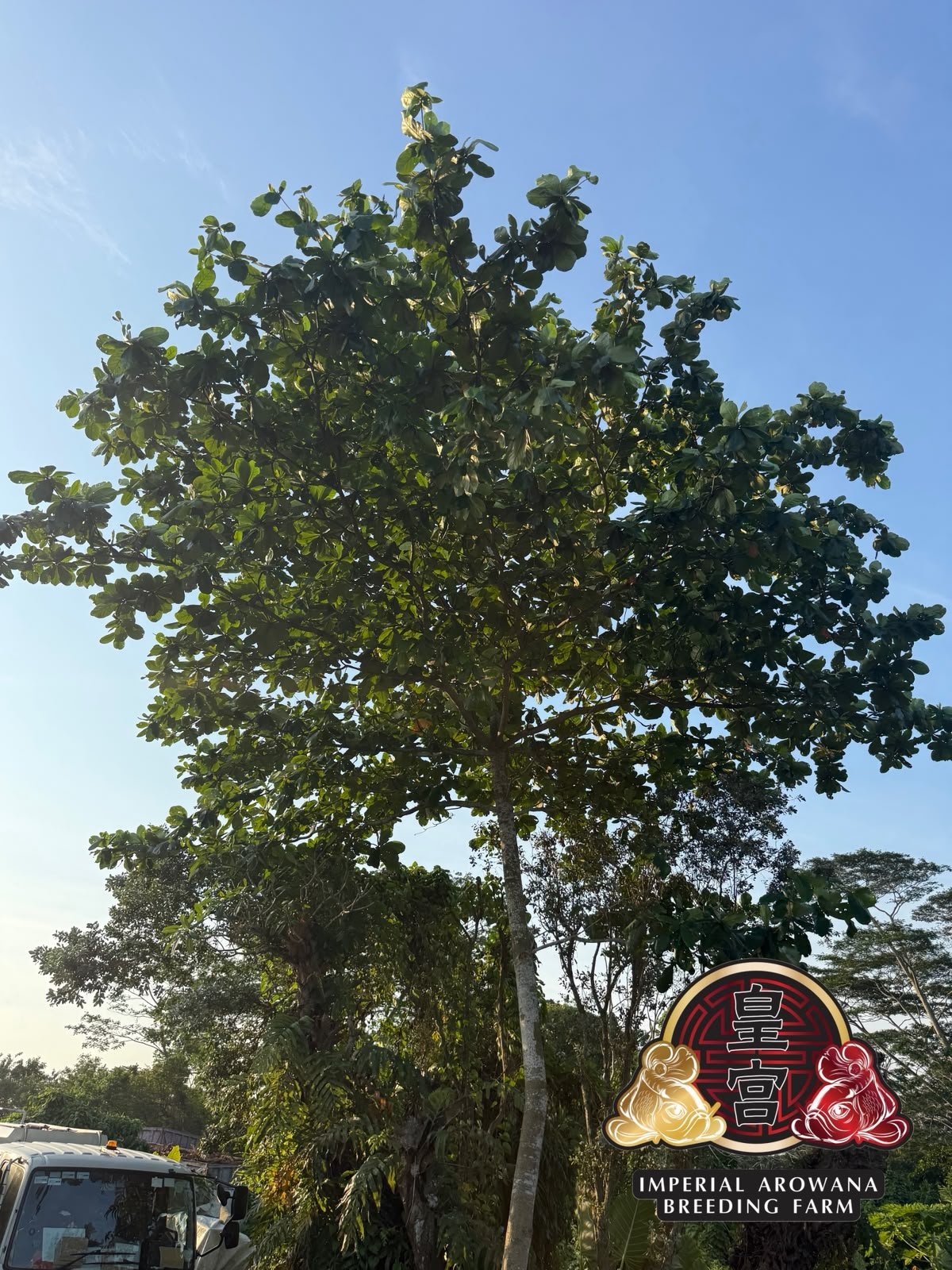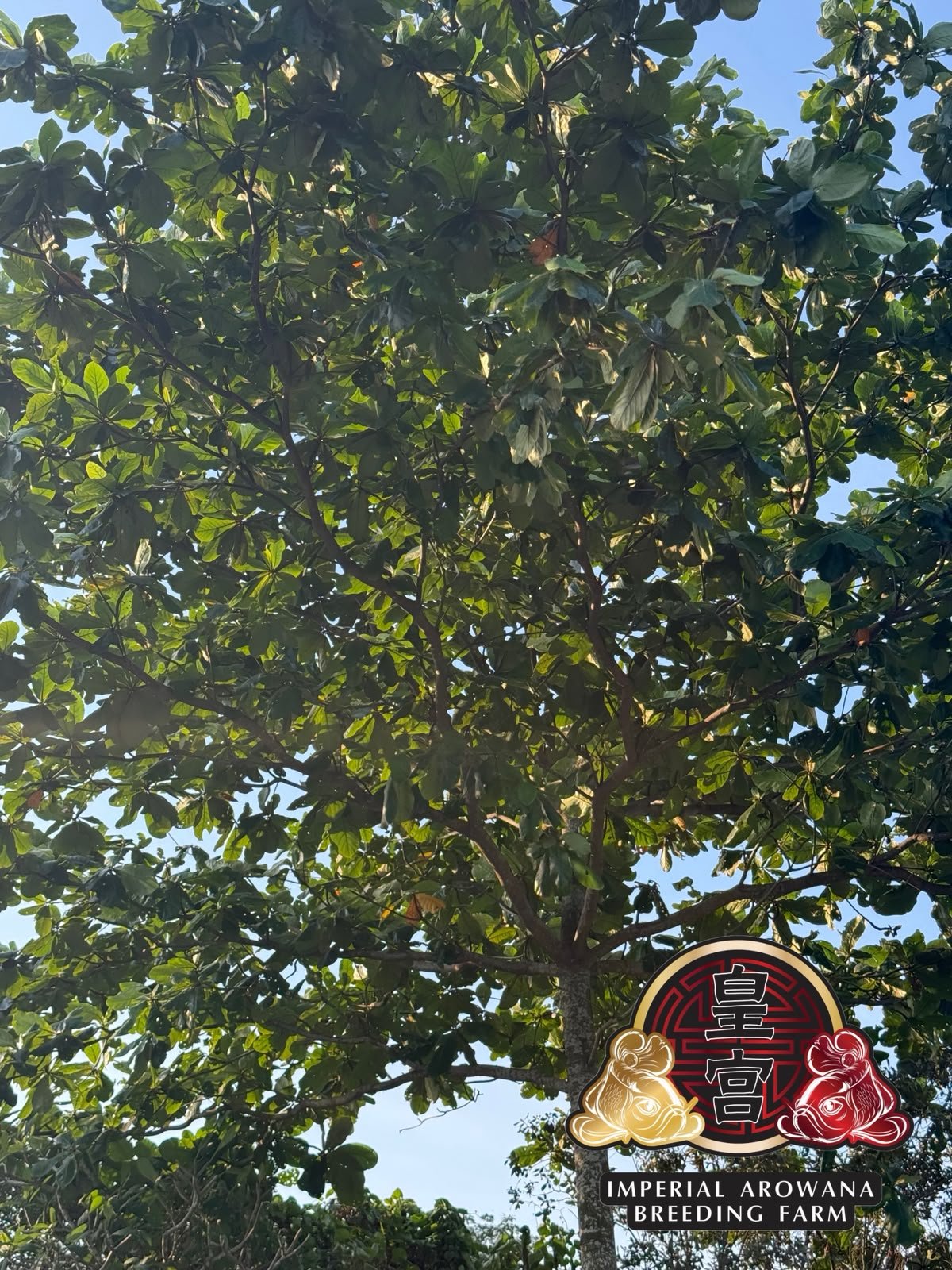
Why?
Because sometimes, one of the most useful things you can have on a fish farm does not come in a bottle. It grows on a tree.
Ketapang, scientifically known as Terminalia catappa and commonly known as the Indian almond or tropical almond tree, has been used by fish keepers and breeders for generations. Today, there is also scientific research behind many of the properties traditionally associated with these leaves.
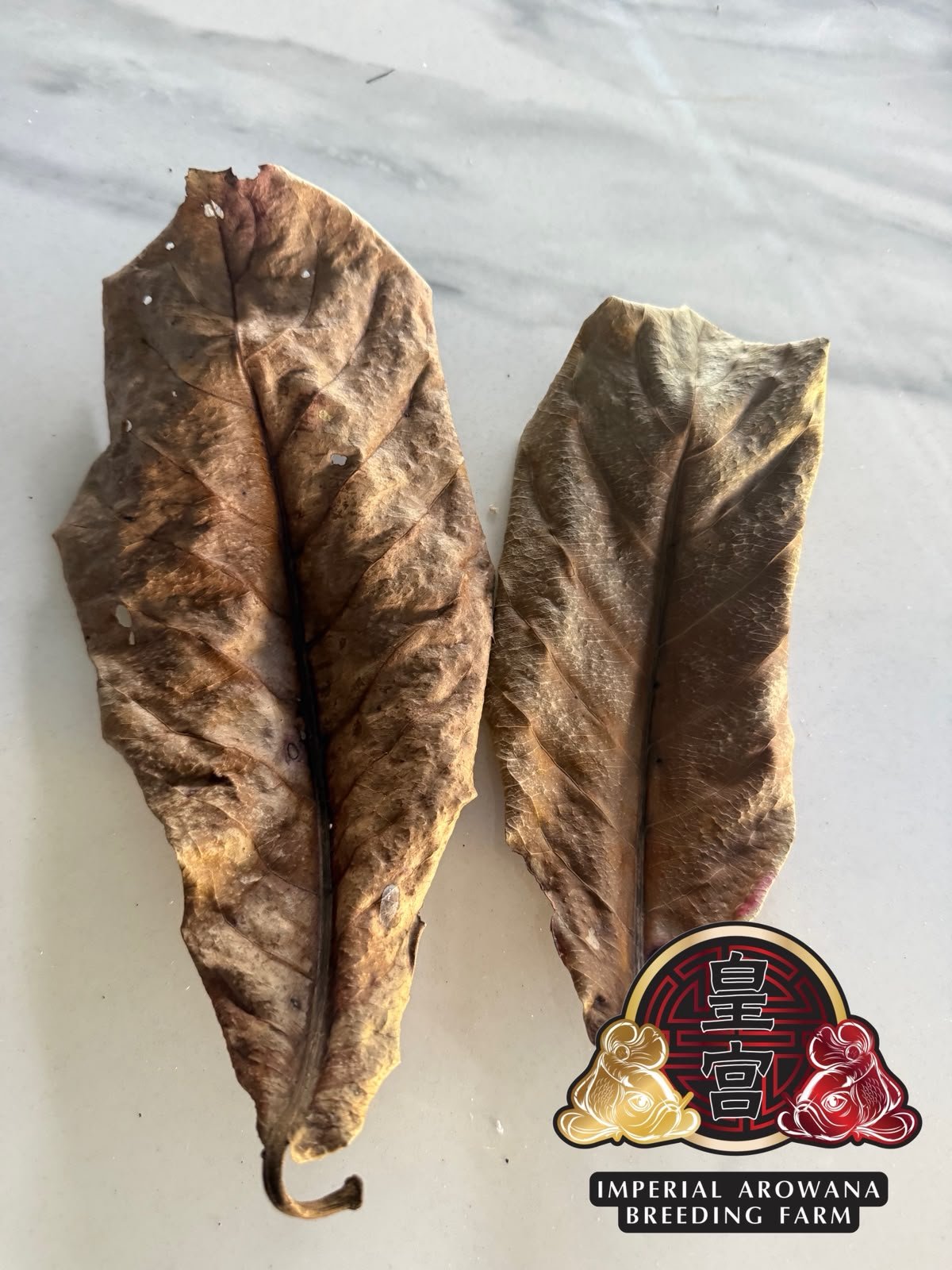
Ketapang leaves contain naturally occurring tannins, flavonoids and phenolic compounds. When dried leaves are soaked in water, some of these compounds are gradually released, producing the familiar tea-coloured water that experienced fish keepers will recognise.
Research has demonstrated antibacterial activity from Terminalia catappa extracts, while studies in aquaculture have also investigated its potential role in supporting fish immunity, disease resistance and overall fish health.
This is why, to us, a ketapang tree is almost a necessity on a fish farm.
When we encounter a fish that is stressed, has suffered an injury, has been transported or simply requires a more natural supportive environment during recovery, ketapang is one of the tools available to us.
But there is something very important to understand.
Ketapang is not magic, and it is not a replacement for proper diagnosis or medication when medication is required.
If your fish has a serious bacterial infection, parasites, poor water quality, ammonia problems or another underlying issue, throwing a handful of leaves into the tank does not solve the cause.
The first things we look at are always the fundamentals:
Water parameters. Temperature. Oxygen. Filtration. Behaviour. Appetite. Physical symptoms.
Ketapang is then used where appropriate as part of the overall management of the fish.
This is also why we prefer having our own trees.
We know where the leaves come from. We know the environment in which the tree is grown, and we can collect naturally aged and fallen leaves rather than depending entirely on commercially packed leaves of unknown origin.
One more point — more does not mean better.
Ketapang releases tannins and other compounds into the water and can influence water chemistry. The amount used should therefore depend on your water volume, existing parameters and the condition of the fish. Natural products still need to be used with knowledge and observation.
At Imperial Arowana, fish keeping has never been simply about adding chemicals whenever something goes wrong.
Sometimes understanding nature gives you another tool.
That is why wherever we establish a farm location, we plant a ketapang tree.
It costs almost nothing to grow.
But when you need it, that tree may become one of the most useful natural resources on the farm.
Our approach to Arowana goes beyond keeping and selling fishes. From selective breeding and DNA profiling to minimise genetic dilution and maintain our pedigree lines, to water management, quarantine, grooming and understanding natural methods of fish care — every part of the process matters.