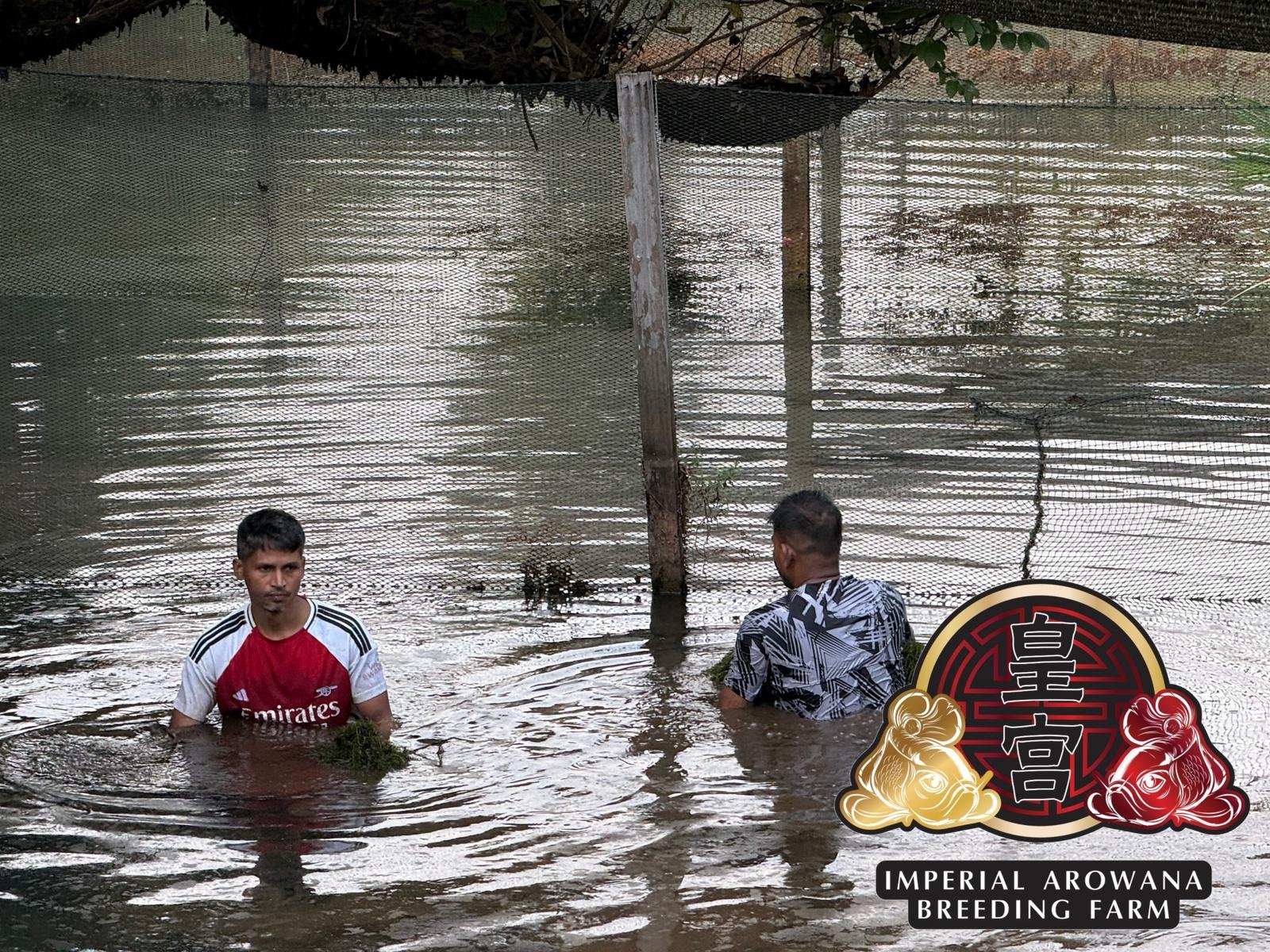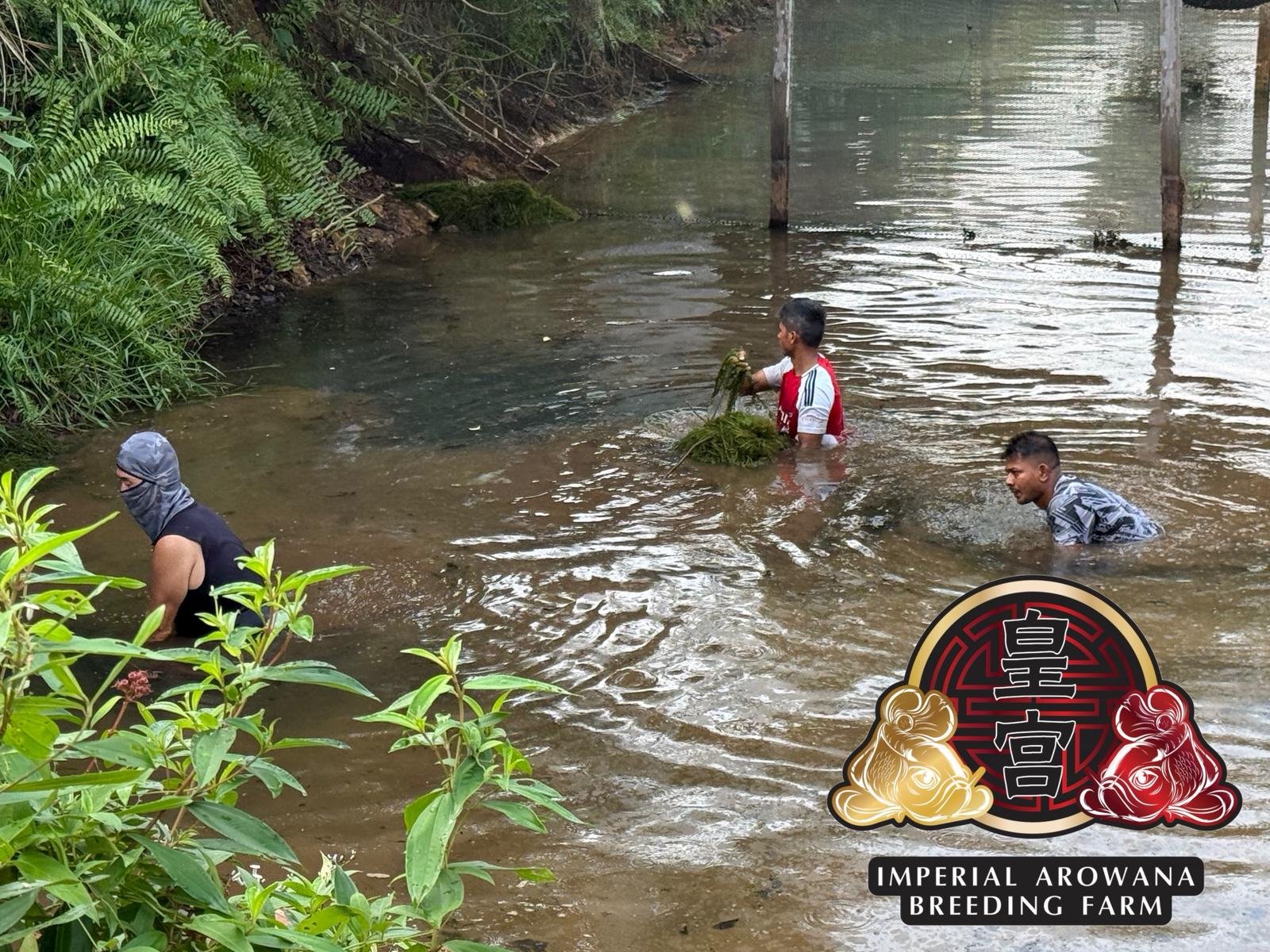
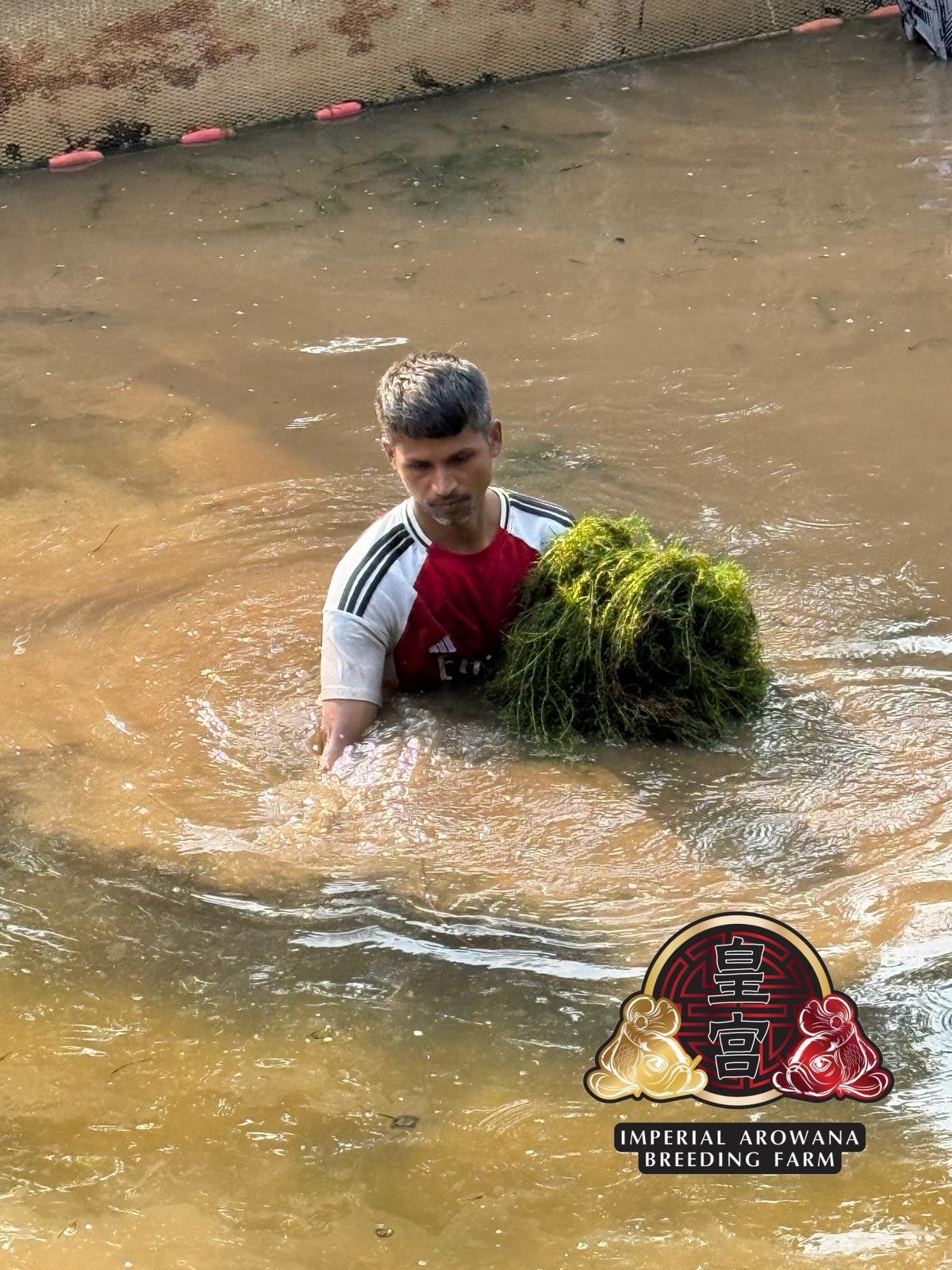
The large volume of water in our ponds helps the water parameters remain more stable, as changes usually take place more gradually. However, this does not mean that the ponds can be left unattended. We follow fixed schedules for pond cleaning, washing, plant management and water-parameter checks. We also carefully plan when brooders should be conditioned, rotated or introduced into different ponds.
This is part of maintaining our breeding ponds and ensuring that the quality and consistency of our offspring continue to meet demand.
Aquatic plants such as Hydrilla, water hyacinth, water lilies and lotus can be highly beneficial in Arowana ponds. They absorb nitrogenous nutrients, help reduce nitrate accumulation, provide shade and contribute to a more natural pond environment. However, these plants complement proper pond management—they do not replace filtration, aeration or regular water testing.
We conduct periodic checks using electronic probes to ensure that important water parameters remain within the correct range.
From our years of observation, flowering aquatic plants can sometimes be one of the natural signs that a harvest may be approaching. However, flowering alone does not confirm a harvest; we also monitor breeder behaviour, pond records and other physical signs.
There is also an important point that many people overlook: aquatic plants produce oxygen through photosynthesis during daylight, but they consume oxygen through respiration at night. When plants become too dense, they can compete with the Arowanas for dissolved oxygen after dark.
Overgrown plants, dying leaves and decaying roots can further increase oxygen consumption. Without sufficient aeration, especially during the night and early morning, dissolved oxygen may fall to dangerous levels and result in the loss of valuable brooders.
That is why thinning overgrown plants, removing dead roots and maintaining proper aeration are essential parts of our farm’s pond-maintenance SOP. Plants may look beautiful above the water, but what is happening below the surface matters even more.
Good pond keeping is about balance—water quality, oxygen, plants, broodstock density and timing must all work together.
At Imperial Arowana, our brooders are also managed through selective breeding, DNA profiling and detailed pedigree tracking. This allows us to plan genetically compatible pairings, minimise DNA dilution and maintain greater consistency in the offspring produced from our farm.